Types of ceramic and the different ways to install it in kitchens and bathrooms
In kitchens and bathrooms, the choice of flooring is crucial, as we want to combine aesthetics, functionality, and durability. These key rooms in the home are exposed to moisture and frequent use, so we need durable and easy-to-maintain materials. We’ll explore popular options: ceramic, porcelain, marble, quartz, and glass. Each flooring has unique characteristics that influence the atmosphere and practicality of these rooms.
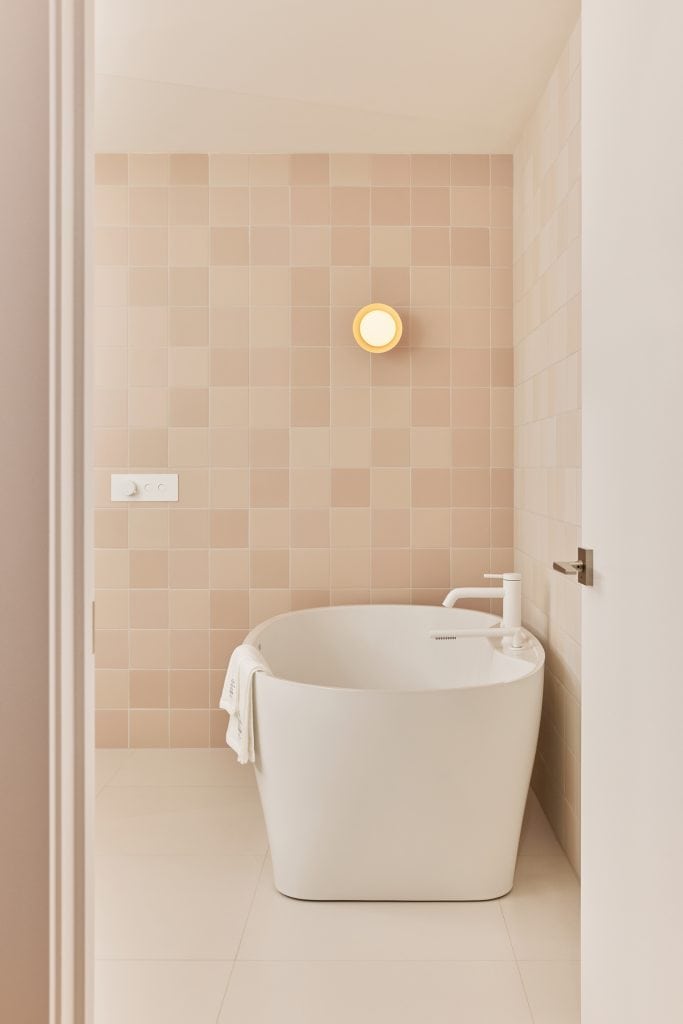
The different coatings
Common choices for kitchens and bathrooms:
Ceramic
Ceramic tiles, whether white or red clay, are easily recognizable because the top is generally not the same color as the bottom. Therefore, if it chips, the breakage will be visible.
Due to the manufacturing process, which includes molding and firing the clay, tile dimensions can vary slightly. It is therefore important to leave joints of at least 1/8 inch.
Ceramic tile sizes are more limited than porcelain.
Its more affordable purchase price makes it suitable for smaller budgets for kitchen and bathroom renovations.
Porcelain
Made of stoneware, this tile offers a more uniform color between the surface and the bottom. This is an advantage because chips are less noticeable.
It offers higher-quality finishes and textures, making imitations very faithful to reality.
Porcelain is often rectified, meaning it is cut very precisely. This minimizes dimensional variations between tiles, allowing for thinner joints, as small as 1/16 of an inch.
It offers the advantage of being highly resistant to temperature changes. This is why it can be used without any problems in a bathroom sauna or even an outdoor kitchen.
Glass
Glass is made by mixing glass, whether crushed, ground, or powdered, with a resin.
Glass brings a contemporary and elegant touch to any space. It can instantly modernize the look of a kitchen or bathroom.
Glass is available in a wide range of colors, textures (sandblasted, frosted, etc.), and finishes, allowing you to customize the look according to your tastes.
Glass is generally easy to clean and maintain. A simple wipe with a sponge is often enough to make it look spotless.
Glass is a non-porous material, making it hygienic and easy to disinfect. It does not absorb odors or stains.
Slate
Slate is a natural stone with a variety of colors, known for its durability, unique appearance, and impermeability, making it a good choice for bathrooms and kitchens.
Slate comes in a wide variety of colors, ranging from deep black to grays, including shades of green, purple, and sometimes even orange or rust. The color can vary considerably from one quarry to another and even within the same block of stone.
It is a relatively hard and strong stone, making it durable and able to withstand the wear and tear of time.
Slate is naturally impermeable to water, making it ideal for applications in humid areas such as bathrooms and kitchens.
It is characterized by its generally fine, flaky texture, which gives it a distinctive layered appearance.
Marble
Marble is a natural metamorphic stone that forms from limestone under intense heat and pressure within the Earth’s crust.
Marble is renowned for its luxurious and elegant appearance.
It comes in a wide variety of colors (white, black, gray, pink, green, etc.) with distinctive veining that gives it a unique character.
It can have a smooth, polished texture, or be left with a more matte or textured finish.
Although it can be more porous than some other types of stone, marble is a durable material that can withstand daily wear and tear if properly maintained and sealed.
There are many types of marble, each with its own color and veining characteristics, sourced from different regions of the world.
Due to its susceptibility to stains and scratches, marble requires more regular and delicate maintenance than other materials. It is important to clean up spills quickly and use marble-specific cleaning products.
Marble is generally a more expensive material than other options like quartz, laminate, or some types of ceramic.
Quartz
Quartz is a manufactured surface material made from natural quartz (a very hard mineral) that is ground and mixed with resins, pigments, and other additives. It is then compacted under high pressure and heated to create solid, non-porous slabs.
It offers a wide variety of appearances, from solid surfaces to patterns imitating marble, granite, or other natural stones.
Unlike marble or granite, quartz is a non-porous material, meaning it does not absorb liquids.
It is highly resistant to scratches, stains, and impacts, making it ideal for high-traffic areas like kitchens.
Its non-porous surface makes daily cleaning and maintenance easier.
Tell us about your project
Chaque projet est une histoire. Une rencontre entre votre vision et notre savoir-faire. À Montréal et dans les environs, nous Every project is a story. A meeting between your vision and our expertise. In Montreal and the surrounding area, we bring to life renovations that combine aesthetics, functionality, and durability.donnons vie à des rénovations qui marient esthétisme, fonctionnalité et durabilité.